Diana Espinoza Aguilar: The Woman Linked to Rafael Caro Quintero’s Life Story


Diana Espinoza Aguilar is one of those names that appears in public searches because of a powerful and controversial connection. She is widely known for her reported relationship with Rafael Caro Quintero, a Mexican figure whose legal history has been followed for decades in both Mexico and the United States. For many readers, her name raises questions about who she is, how she became connected to Caro Quintero, whether they were married, and why U.S. authorities placed her in official records.
Her story is not simple, and it should not be treated like gossip. Diana Espinoza Aguilar became part of public attention through legal documents, media interviews, and reports connected to Rafael Caro Quintero’s long criminal case. This article looks at what is publicly known, what remains unclear, and why her name continues to be linked to one of the most discussed chapters in Mexican organized crime history.
Quick Bio
| Detail | Information |
|---|---|
| Full Name | Diana Espinoza Aguilar |
| Other Name | Altagracia Espinoza Aguilar |
| Date of Birth | July 17, 1970 |
| Birthplace | Matachi, Chihuahua, Mexico |
| Nationality | Mexican |
| Known For | Link to Rafael Caro Quintero |
| Relationship | Reported common-law wife |
| Meeting Place | Puente Grande prison |
| Public Record | OFAC designated |
| Designation Year | 2016 |
| Related Law | Kingpin Act |
| Child | Reportedly one son |
| Parents | Not publicly verified |
| Education | Not publicly verified |
| Public Status | Private figure |
Who Is Diana Espinoza Aguilar?
Diana Espinoza Aguilar is a Mexican woman publicly known because of her reported personal connection to Rafael Caro Quintero. She is not widely known for a public career, political role, entertainment work, or business achievement. Instead, her name became visible after U.S. authorities and news outlets connected her to Caro Quintero, a man long associated with the Guadalajara Cartel and with major criminal proceedings in Mexico and the United States.
Because of that connection, people often search for Diana Espinoza Aguilar to understand her role in his life story. Some want to know whether she was his wife, while others want to know how they met or why her name appears in U.S. sanctions records. The most accurate way to understand her is to separate confirmed public information from online speculation, especially because many personal details about her life remain limited or unverified.
Early Life and Background
Diana Espinoza Aguilar was born in Matachi, Chihuahua, Mexico, according to public sanctions records. Her date of birth is listed as July 17, 1970. These are among the few clearly documented personal details available about her early identity. Unlike many public figures, there is no broad record of interviews, childhood stories, family memories, or early professional milestones that explain her life before she became publicly linked to Rafael Caro Quintero.
This lack of early-life information is important because it reminds readers that not every detail online should be accepted as fact. Many articles try to fill empty spaces with guesses about her upbringing, personality, or family life, but a careful profile should avoid that. What can be said is that her public identity appears to have formed later, largely through her legal history, prison connection, and reported relationship with Caro Quintero.
Education and Personal Life
There is no reliable public record that clearly confirms Diana Espinoza Aguilar’s education. No verified school names, degrees, or professional training details are widely available from strong public sources. That does not mean she had no education; it simply means those details have not been confirmed in a way that should be repeated as fact. In sensitive biographies, leaving out unverified claims is better than presenting weak information as truth.
Her personal life is also partly private and partly public. The public side is connected to her reported relationship with Rafael Caro Quintero, her time at Puente Grande prison, and her later mention in U.S. government records. The private side includes areas such as her parents, siblings, childhood, and personal interests, which are not clearly documented. Readers should understand that a person can become publicly known through one major connection while much of their individual life remains outside the public record.
Connection to Rafael Caro Quintero
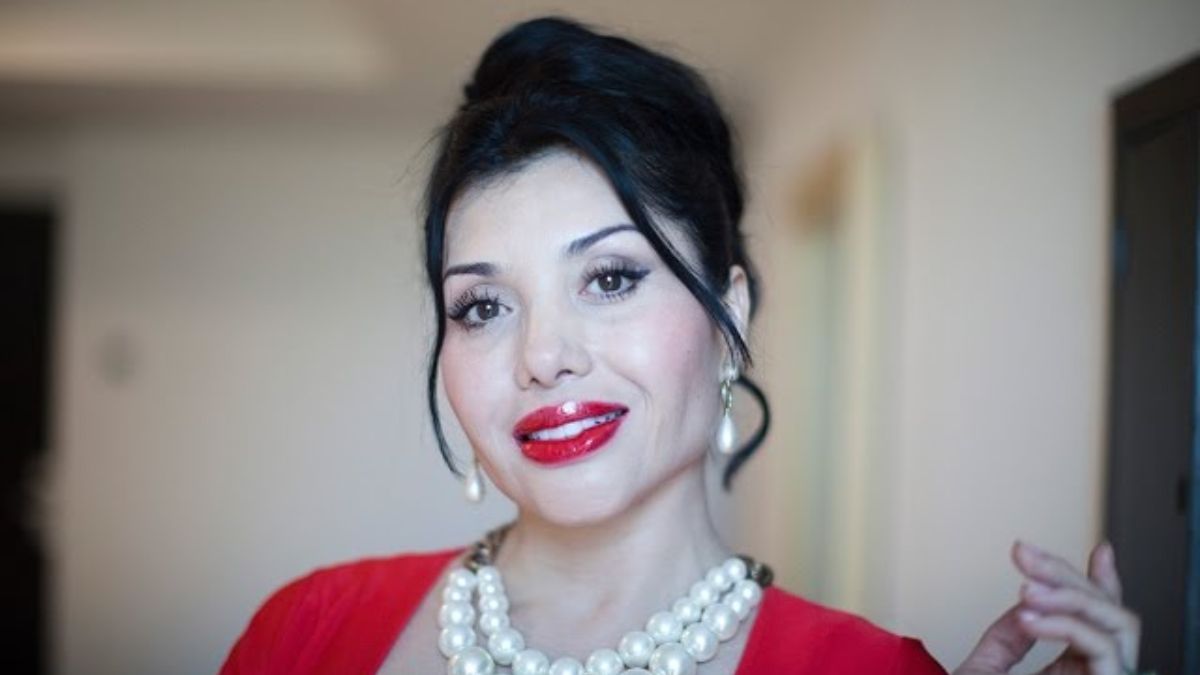
The connection between Diana Espinoza Aguilar and Rafael Caro Quintero is the main reason her name appears in search results. U.S. Treasury described her as Caro Quintero’s reported common-law wife and said she acted for or on his behalf. Media coverage has also described her as his wife or partner, though the exact legal nature of their relationship is often discussed through different wording across sources.
Their relationship reportedly began while both were connected to the prison system. Treasury records state that she was at Puente Grande prison in Jalisco, where Caro Quintero was also incarcerated. Univision reporting later added a more personal account, saying Caro Quintero first saw her during a televised prison beauty contest and that their relationship later developed. This unusual beginning is one reason the story has remained memorable to the public.
Was Diana Espinoza Aguilar Married?
Many readers ask whether Diana Espinoza Aguilar was legally married to Rafael Caro Quintero. Public sources often call her his wife, while U.S. Treasury used the more careful phrase “reported common-law wife.” That phrase suggests a recognized close partnership in official language, but it is not the same as publishing a confirmed civil marriage certificate. For this reason, the most accurate wording is to describe her as his reported wife or reported common-law wife.
Univision reporting has said their relationship led them to the altar and that they later became parents. The same reporting also described her speaking about separation and wanting her child to grow up away from the drug-trafficking world. This gives the public a more personal view of the relationship, but it still should be handled carefully. The strongest approach is to say that she has been publicly described as Caro Quintero’s wife while noting that official U.S. records used more cautious wording.
Children and Family Details
Reports say Diana Espinoza Aguilar and Rafael Caro Quintero had a son. This detail is often repeated because it helps explain why her story continues to draw attention beyond the legal record. However, the child’s private life should not become the center of public discussion. Mentioning that they reportedly became parents is enough for a responsible article, especially when the child is not the public figure in this story.
Information about Diana Espinoza Aguilar’s parents, siblings, and wider family is not clearly verified in reliable public records. Some websites may claim to know more, but many such claims are not backed by strong documentation. When writing about family members, it is important to avoid unnecessary exposure. Her family background should only be discussed when the information is helpful, verified, and relevant to understanding the public story.
Legal Attention and OFAC Designation
Diana Espinoza Aguilar became part of official U.S. records in 2016 when the U.S. Department of the Treasury’s Office of Foreign Assets Control designated her under the Foreign Narcotics Kingpin Designation Act. Treasury said she acted for or on behalf of Rafael Caro Quintero by holding assets and conducting activities on his behalf. This action placed her name into a formal legal and financial context, not just a media narrative.
The designation meant that any assets she may have had under U.S. jurisdiction were frozen, and U.S. persons were generally prohibited from doing business with her. For readers unfamiliar with sanctions, this type of action is not just a public label. It can affect financial access, property interests, and legal relationships connected to the United States. It also explains why her name appears in official databases rather than only in entertainment-style articles.
Understanding the Allegations
When discussing Diana Espinoza Aguilar, wording matters. U.S. Treasury made strong statements about her alleged support role for Rafael Caro Quintero, but readers should understand the difference between an administrative designation, a news report, and a criminal conviction. A designation reflects a government action based on its findings, while a court conviction requires a different legal process. This distinction helps keep the article fair and accurate.
The same careful approach should be used for all claims about her life. It is appropriate to say that U.S. authorities accused her of acting on behalf of Caro Quintero, because that is part of the public record. It is less responsible to repeat unsupported claims about wealth, secret power, or personal behavior without evidence. A trustworthy profile should inform readers without turning a serious legal matter into sensational storytelling.
Rafael Caro Quintero’s Larger Story
Rafael Caro Quintero is widely known as a co-founder of the Guadalajara Cartel and as a central figure in the 1985 case involving the kidnapping and murder of DEA Special Agent Enrique “Kiki” Camarena. His name became one of the most recognized in the history of U.S.-Mexico drug enforcement. He spent many years imprisoned in Mexico, was released in 2013 on a legal technicality, and later became wanted again by U.S. authorities.
He was arrested by Mexican authorities in July 2022 and later taken into U.S. custody in 2025 along with other wanted defendants. This long timeline is important because it explains why anyone closely connected to him, including Diana Espinoza Aguilar, receives public attention. Her story is not separate from his legal history; it sits inside the larger public conversation about cartel leadership, law enforcement, family networks, and cross-border justice.
Why People Search Her Name
People search for Diana Espinoza Aguilar because her story combines several subjects that naturally attract public curiosity: a high-profile relationship, prison history, legal sanctions, family questions, and the life story of Rafael Caro Quintero. Many readers are not only looking for basic facts. They are trying to understand how a private woman became tied to one of the most recognizable names in Mexican criminal history.
Another reason her name continues to trend is that details about her are limited. When public information is incomplete, curiosity often grows. Readers want answers about her age, background, children, marriage, and current life. However, limited information should not be treated as permission to invent details. The best article gives readers a clear picture while admitting where the public record ends.
Media Interviews and Public Image
Media interviews have shaped how many people see Diana Espinoza Aguilar. Univision reporting presented her as a woman who spoke about her relationship with Rafael Caro Quintero, their family life, and her desire for her son to grow up away from drug trafficking. That kind of interview adds a human layer to a story that is often told only through law enforcement statements and court records.
At the same time, media portrayals can never show a full life. A television interview may reveal emotion, regret, fear, loyalty, or personal conflict, but it is still only one window into a complicated situation. Diana Espinoza Aguilar’s public image is built from several sources: official records, news coverage, interviews, and public curiosity. A balanced article should consider all of them without treating any single source as the entire truth.
Public Records Versus Rumors
There are many online claims about Diana Espinoza Aguilar, but not all of them are reliable. Some articles repeat details about net worth, lifestyle, beauty titles, family members, or personal habits without strong evidence. These claims may attract clicks, but they do not always help readers understand the real story. In fact, they can make the topic more confusing by mixing public records with unsupported claims.
The safest way to read her story is to prioritize documented information. Government records confirm her name, alias, date of birth, birthplace, and OFAC designation. Credible reporting provides context about her relationship with Rafael Caro Quintero and her public comments. Everything else should be handled with caution. For a reader, this method makes the story clearer, more respectful, and more useful.
What Her Story Reveals
Diana Espinoza Aguilar’s story reveals how people connected to powerful figures can become part of legal and public attention even when they are not the central person in a criminal case. Her name appears because authorities believed she was connected to Caro Quintero’s activities and assets. That shows how investigations can extend beyond one person and look at relationships, property, financial movements, and family ties.
Her story also shows the human cost of being connected to a notorious public figure. Whatever readers think about the allegations, there is a personal side involving relationships, a child, public judgment, and long-term consequences. This is why the topic should be written with care. The goal is not to glamorize crime or create drama, but to explain how her name became part of a much larger historical and legal narrative.
Final Thoughts
Diana Espinoza Aguilar remains a subject of public interest because her name is tied to Rafael Caro Quintero’s life story, legal history, and personal relationships. Public records identify her as his reported common-law wife, list her identifying details, and connect her to a 2016 U.S. Treasury designation. Media reporting adds another layer by describing their relationship, their reported child, and her later statements about wanting distance from the world surrounding drug trafficking.
The most important takeaway is that her story should be understood through verified information, not rumors. Some parts of her life are documented, while others remain private or unclear. A fair profile of Diana Espinoza Aguilar recognizes her connection to Rafael Caro Quintero, explains why that connection matters, and avoids turning uncertain details into facts. That balance is what gives readers a complete, responsible, and helpful understanding of her public story.
Frequently Asked Questions (FAQs)
Who is Diana Espinoza Aguilar?
Diana Espinoza Aguilar is a Mexican woman publicly known for her reported relationship with Rafael Caro Quintero. U.S. records also list her under the name Altagracia Espinoza Aguilar.
Why is Diana Espinoza Aguilar connected to Rafael Caro Quintero?
She is connected to Rafael Caro Quintero because U.S. Treasury described her as his reported common-law wife and alleged that she acted on his behalf. Media reports have also described their personal relationship and family connection.
Did Diana Espinoza Aguilar and Rafael Caro Quintero have children?
Reports say Diana Espinoza Aguilar and Rafael Caro Quintero had a son. Because the child is not the public figure, detailed private information should be avoided.
Was Diana Espinoza Aguilar sanctioned by the United States?
Yes, the U.S. Treasury’s OFAC designated Diana Espinoza Aguilar in 2016 under the Kingpin Act. The designation restricted U.S.-related financial activity involving her.
What is publicly known about Diana Espinoza Aguilar’s early life?
Public records list her birthplace as Matachi, Chihuahua, Mexico, and her date of birth as July 17, 1970. Details about her parents, education, and early personal life are not widely verified.
Read More: Esme Louise Sutter